

Course 01: Fundamentals of Community-Scale Hydro Mini-Grids
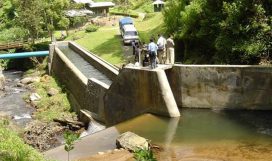
This course will provide participants with a solid introduction, which can also be useful as a refresher course, on the foundational elements of sustainable community-scale hydropower implementation. While technical in focus, the training emphasizes climate resilience and other socio-environmental co-benefits. An engineering or science background can be beneficial but not required. Format: E-learning, 6-weeks, self-paced with weekly live Q/A sessions Duration: Feb. 7 to March 18, 2022

Course 02: Climate Resilient Solutions to Hydro Mini-Grids
We are excited to offer a 5-day training on leveraging watershed management and Indigenous governance values and ecological knowledge to enable climate resilience of community hydro systems; and how watershed management can build resilience to climate change and sustainable energy access in rural communities. Key topics include: - Watersheds, climate adaptation and the water-energy-food nexus - Governance and environmental stewardship in Indigenous and local communities - Watershed management from baseline assessment to maintenance and monitoring - How to integrate watershed management with hydro mini-grid planning and implementation Format: E-learning, 5-days, self-paced with optional live Q/A on March 21 and 25 Duration: March 21 - 25, 2022



Course 03: Agroecological Benefits to Hydro Mini-Grids
This 4-day course focuses on agroecological benefits of hydro mini-grids. Learn how community hydro electricity and watersheds can support sustainable food production. Key topics include the following, as they relate to hydro mini-grids: - Elements of agroecology - Water-energy-food nexus - Food forests as a regenerative solution - Agri-processing end uses of electricity Format: E-learning, 4-days, self-paced with optional live Q/A on March 28 and 31 Duration: March 26 - 31, 2022

Course 04: Local Manufacturing of Turgo Turbines
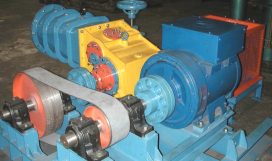
This 1-week, virtual course aims to advance local manufacturers in the global South who have experience in designing and fabricating small-scale (<1 MW) hydropower turbines. At the core of the course curriculum is an open source Turgo turbine design package, developed by PEEDA in collaboration with the UoB, TTL/KU and NYSE. Pre-qualifications and course details are explained here. Format: E-learning, 1-week, self-paced, with mandatory live Kick-off and Q&A sessions June 22 and June 29 Duration: June 22 - 29, 2022 Details: www.hpnet.org/blog/local-manufacturing-turgo
